
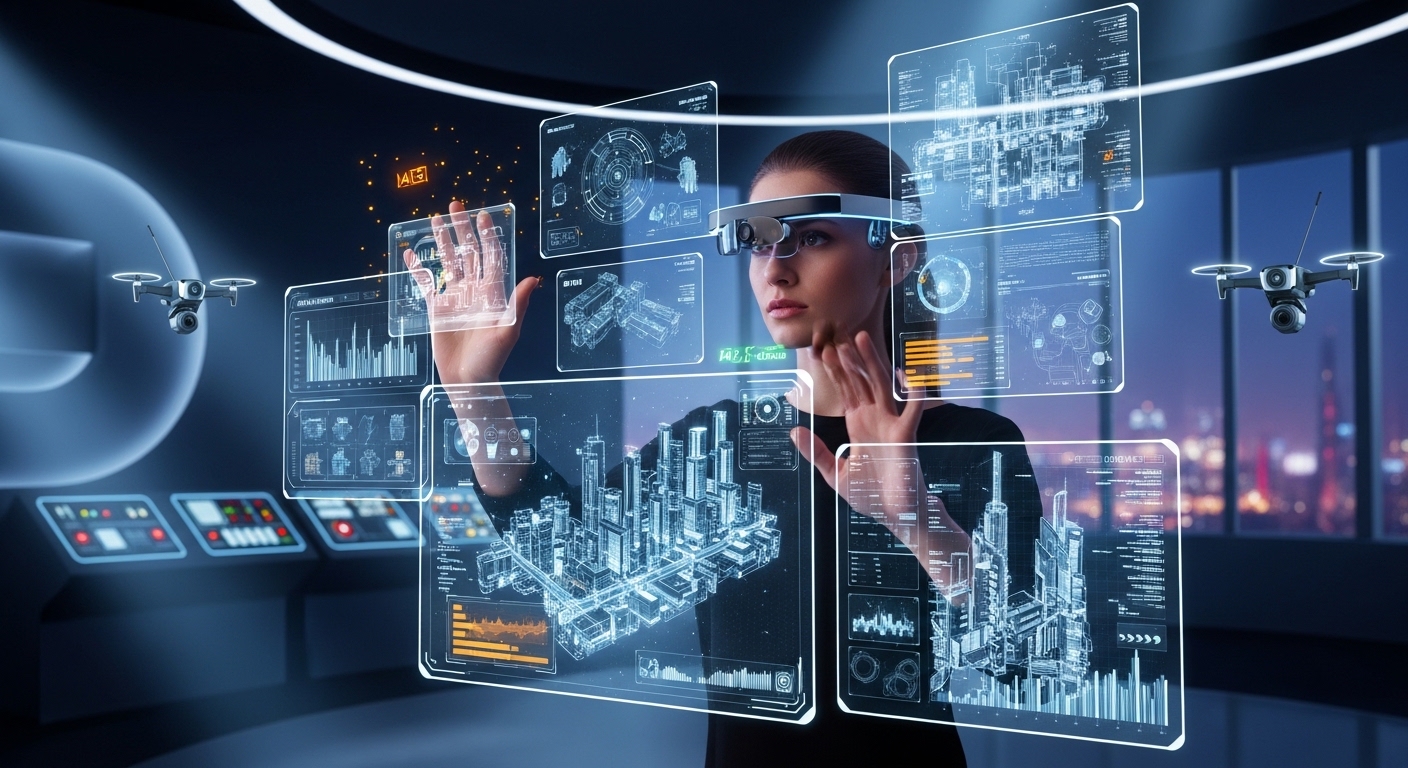
The future of UI/UX strategy is being reshaped by the rapid pace of technological innovation. Artificial intelligence is driving adaptive interfaces that personalize layouts, content, and workflows in real time, enabling experiences that respond to individual preferences and behaviors. These AI-powered interfaces enhance usability while increasing engagement and efficiency across digital platforms.
Voice and conversational interfaces are expanding accessibility, allowing users to interact with products through natural language rather than traditional touch or click mechanisms. This shift requires designers to rethink interaction patterns, ensuring that experiences are intuitive and context-aware. Similarly, augmented reality (AR) and virtual reality (VR) introduce immersive, spatial design challenges. Designers must consider depth, gesture controls, and contextual feedback to maintain usability within three-dimensional environments, balancing creativity with clarity.
Ethical design and inclusivity are becoming strategic priorities. Transparent data practices, accessibility standards, and culturally sensitive interfaces are essential for building long-term user trust. Companies that embed ethical considerations into their UX processes strengthen credibility and position themselves for sustainable growth.
Automation and predictive analytics are also influencing future experiences. By anticipating user needs and streamlining workflows proactively, products can reduce friction and increase satisfaction. Strategic UI/UX planning must incorporate these capabilities while maintaining human-centered design principles.
As digital ecosystems evolve, the role of UI/UX strategy will continue to expand. Continuous experimentation, research, and iterative refinement are essential to remain competitive. Organizations that embrace innovation while prioritizing usability, accessibility, and ethical design will lead the next generation of digital transformation, delivering experiences that are both intelligent and meaningful.