
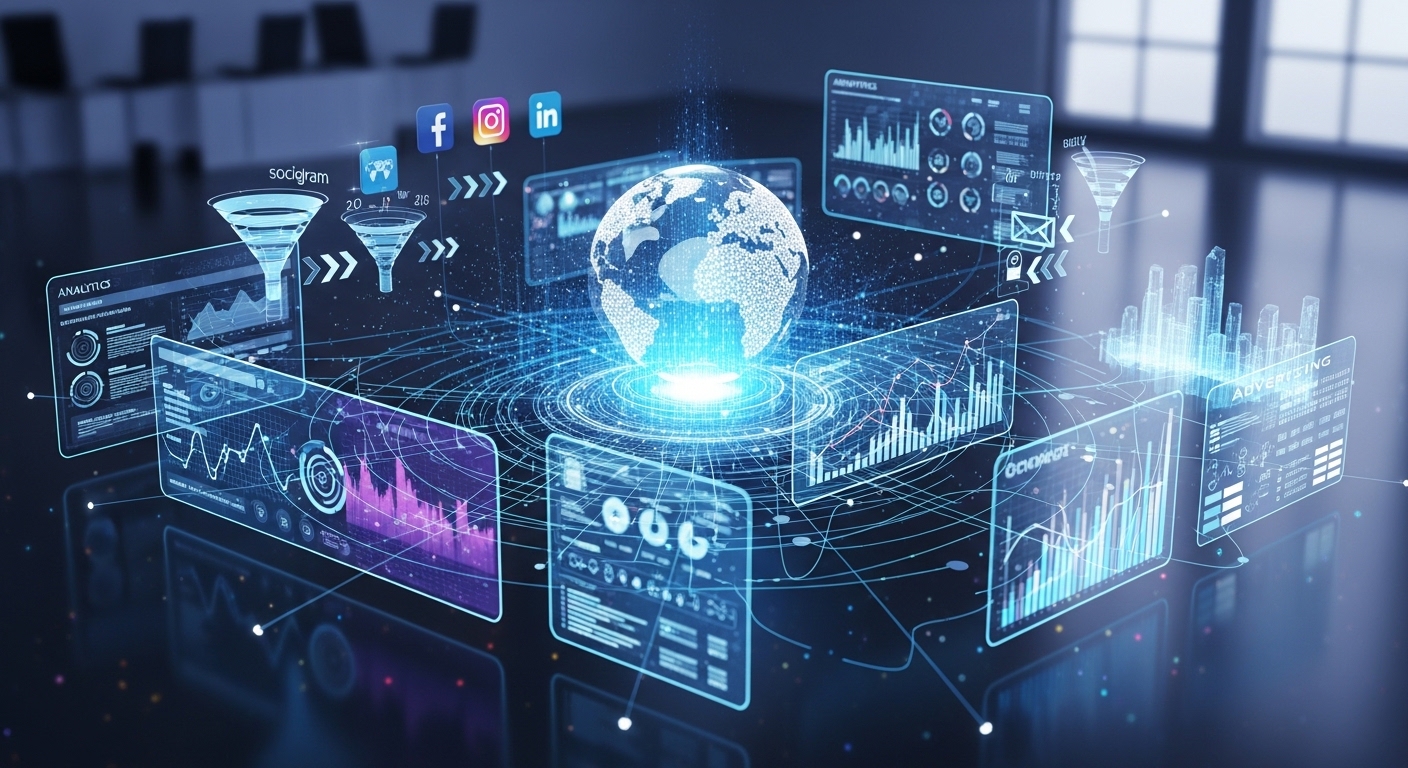
The real strength of digital marketing lies in integration. When strategy, content, social media, paid advertising, automation, and analytics work together, each element amplifies the others, creating a cohesive ecosystem rather than a collection of isolated activities.
Integrated marketing ensures consistent messaging across platforms. Organic content can support paid campaigns, reinforcing key brand messages and extending reach. Email workflows nurture leads generated from social channels or website traffic, maintaining engagement throughout the customer journey. Analytics provide feedback that informs adjustments across all channels, ensuring campaigns are optimized in real time.
Scalability and predictability emerge from this integration. When systems communicate seamlessly, growth becomes measurable rather than sporadic. Fragmented efforts, on the other hand, introduce inefficiencies, duplicated work, and inconsistent brand perception, reducing the overall impact of marketing investments.
Coordination also enhances resource allocation. By linking content, campaigns, and automation with performance insights, teams can focus on high-impact activities and eliminate redundancy. Decisions become data-informed, and optimization occurs continuously rather than reactively.
Ultimately, digital growth is not a byproduct of random activity—it is engineered. Structured planning, aligned execution, and evidence-based optimization allow organizations to turn digital marketing into a reliable engine for revenue. Mastery of integration transforms isolated tactics into a strategic, high-performing system capable of delivering sustainable results over time.