
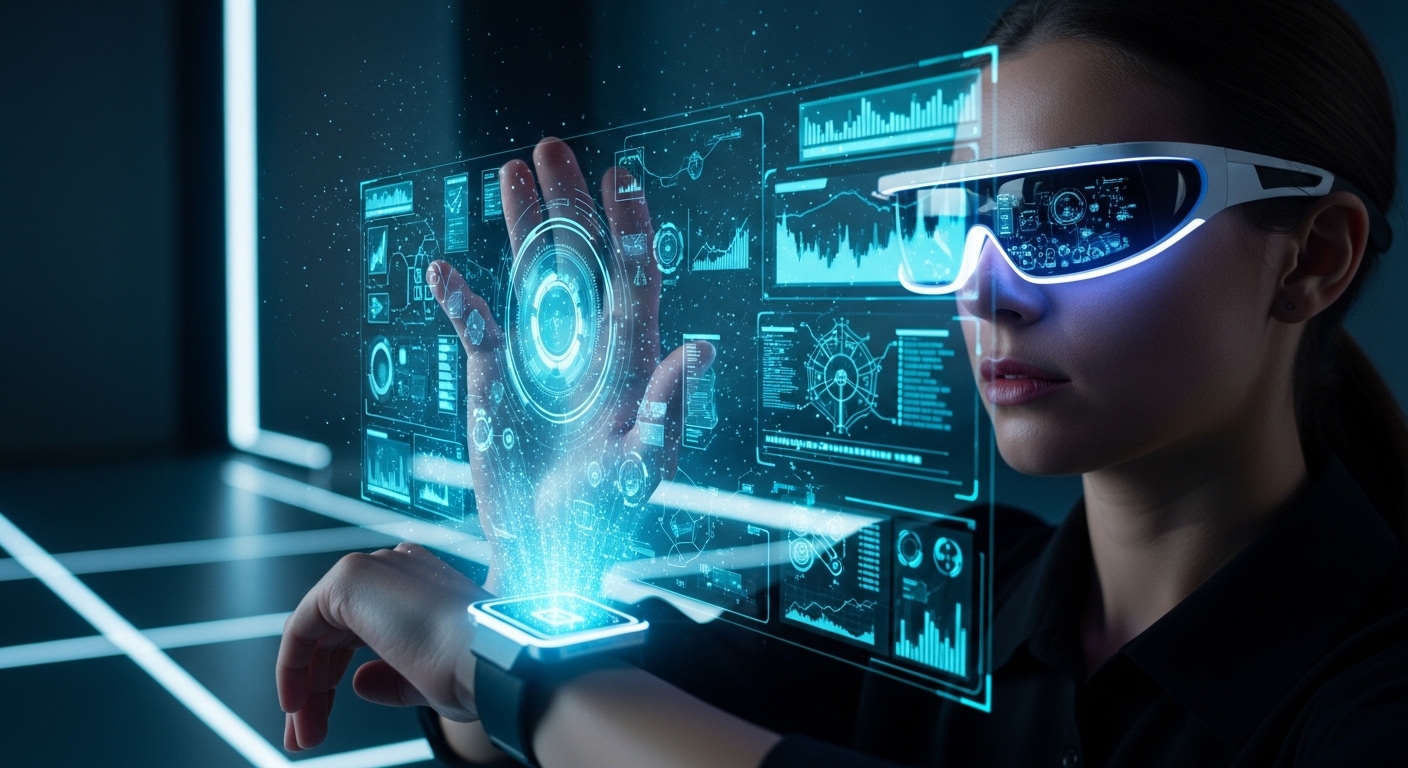
As technology advances, innovation is increasingly focused on enhancing human capabilities rather than replacing them. Human-centered technologies prioritize performance, creativity, and well-being, ensuring that digital progress aligns with real-world human needs and values. This approach emphasizes collaboration between intelligent systems and people, rather than treating technology as a purely autonomous force.
Augmented reality (AR) and virtual reality (VR) platforms are redefining education, healthcare, and industrial training. Medical professionals use immersive simulations to practice complex procedures safely, while students benefit from interactive learning environments that improve retention and engagement. In industrial settings, VR supports virtual prototyping and scenario testing, reducing costs and accelerating design processes.
Wearable devices and biometric sensors are empowering individuals to monitor health in real time. From tracking heart rate and sleep patterns to detecting early signs of medical conditions, these tools enable proactive wellness management and personalized insights. Brain-computer interfaces (BCIs) are also emerging, exploring direct communication pathways between humans and machines to enhance cognitive performance and accessibility for people with disabilities.
Ethical design principles remain central to human-centered technology. Accessibility, inclusivity, and data privacy are critical factors in ensuring that innovation benefits all users equitably. Developers prioritize intuitive interfaces that minimize complexity, enabling seamless interaction with advanced systems without creating unnecessary barriers.
Collaboration between humans and intelligent systems defines the next stage of technological evolution. By combining computational precision with human creativity, empathy, and contextual understanding, these technologies expand the scope of what is possible while preserving the core values of human experience.
Human-centered innovation represents a shift from efficiency-driven progress to purposeful advancement. The focus is no longer solely on what technology can do, but on how it can empower people—enhancing skills, improving decision-making, and supporting well-being. In this way, the future of technology becomes a true partner in human growth, enabling a more capable, connected, and thoughtful society.