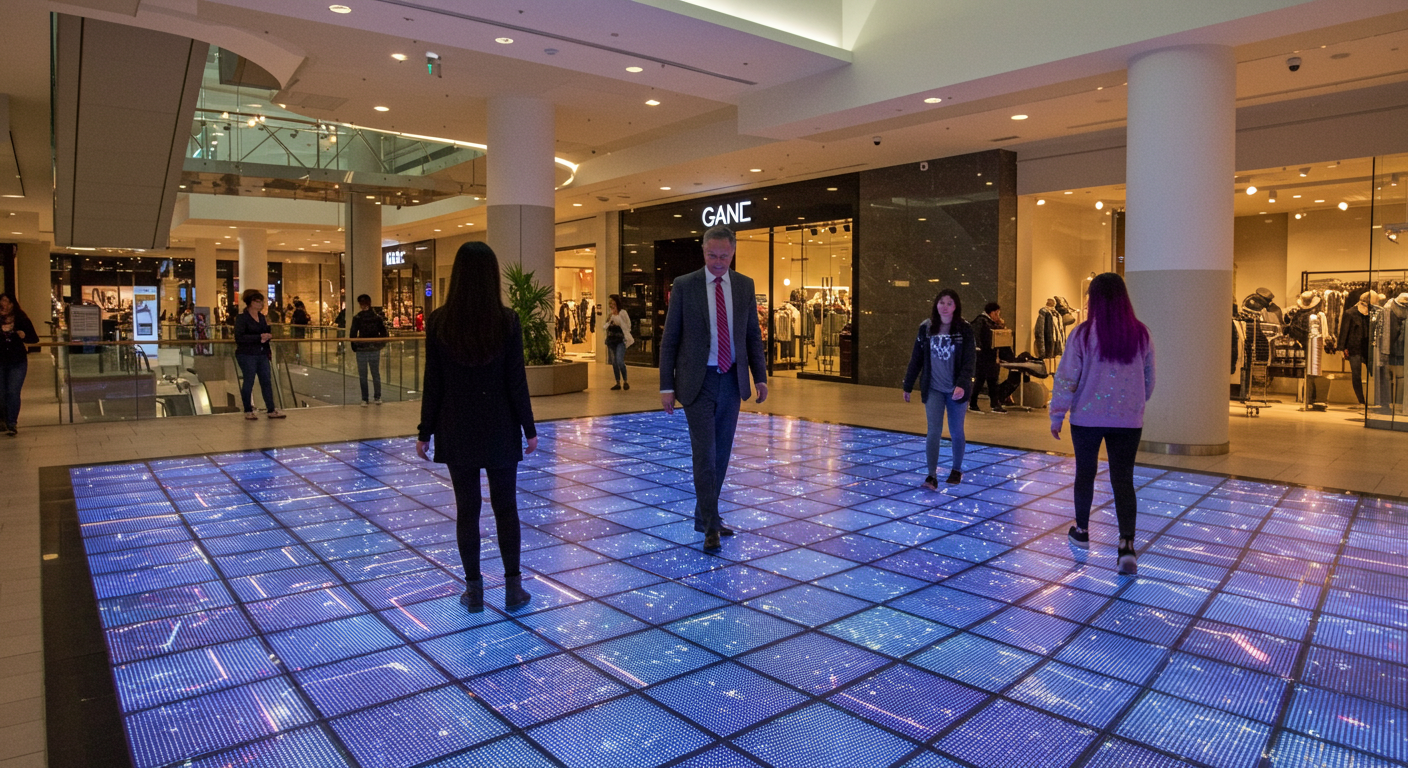
The ground beneath our feet has long been ignored as a canvas. It bears weight, channels movement, and endures wear—but rarely does it engage. That is changing. Interactive LED floors are turning passive surfaces into responsive environments that react to presence, motion, and intent. In shopping malls, a child’s step triggers a ripple of digital petals. In corporate lobbies, directional arrows light up to guide visitors without a single sign. In museums, historical timelines unfold underfoot as visitors walk through eras. The engineering is as impressive as the experience: modular tiles assembled on-site, sealed under shock-resistant acrylic, capable of supporting heavy foot traffic while maintaining pixel-perfect clarity. But the true innovation lies in the philosophy. These floors don’t demand attention; they invite participation. They transform transit into interaction, routine into discovery. Unlike wall-mounted screens that create distance, floor displays collapse it—literally placing the viewer inside the narrative. The content is designed for brevity and intuition: a glance, a step, a reaction. No instructions are needed. This subtle interactivity fosters a sense of play and wonder, especially in spaces where formality often dominates. Even in functional settings like airports or hospitals, LED floors can reduce anxiety by providing intuitive wayfinding or calming visual rhythms. They represent a shift from static architecture to living space—one that listens, responds, and remembers. The floor is no longer just something we walk on; it’s something that walks with us.