
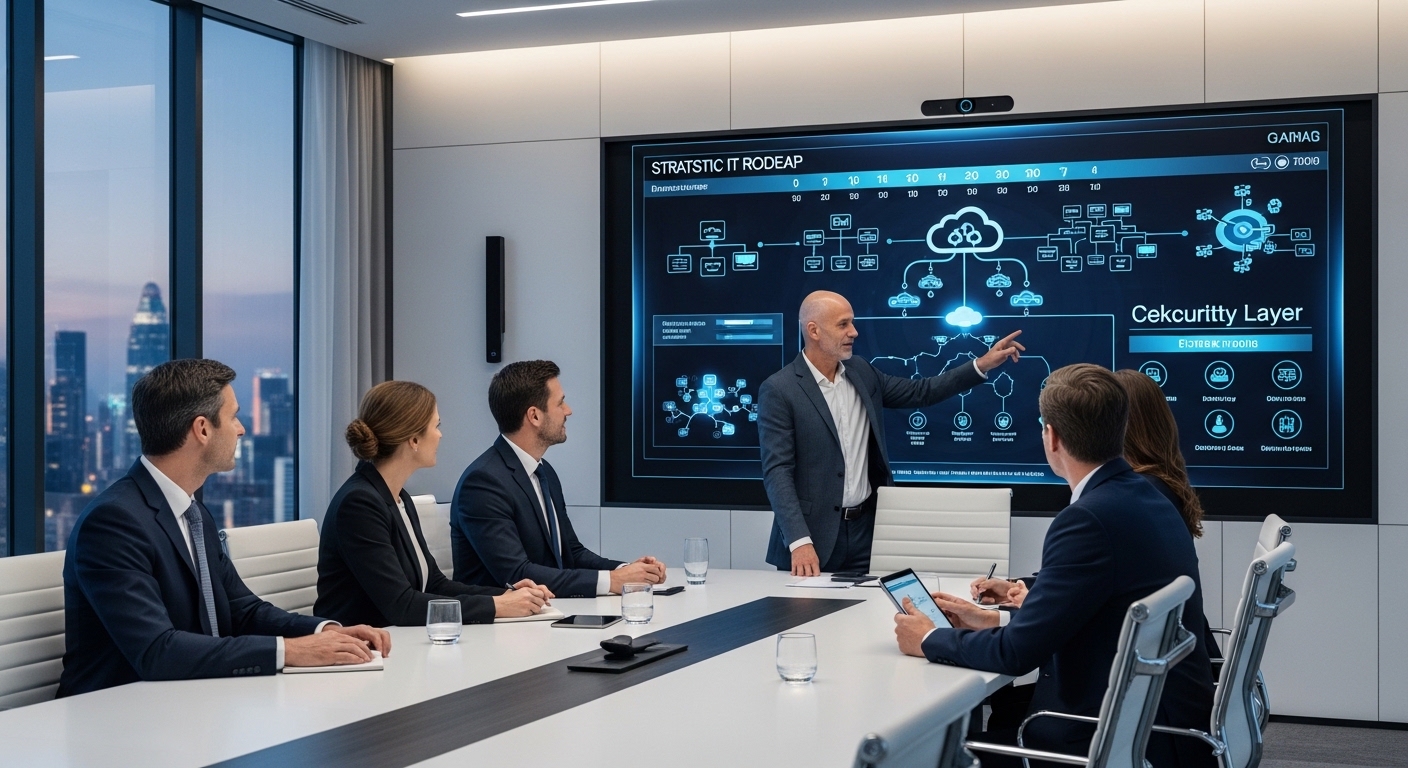
In today’s digital landscape, IT consulting has evolved far beyond basic troubleshooting or software recommendations. Modern IT consulting emphasizes strategic alignment between technology initiatives and overarching business objectives, helping organizations plan for sustainable growth over the next three to five years through structured IT roadmaps.
A comprehensive IT roadmap begins with a thorough assessment of the existing technology environment. Consultants evaluate infrastructure performance, identify system gaps, review cybersecurity readiness, and analyze integration challenges. This process often includes cloud readiness assessments, audits of legacy systems, and stakeholder interviews to uncover operational bottlenecks that hinder efficiency and scalability. Understanding both technical limitations and business impacts ensures that technology decisions support strategic goals.
Once the current state is understood, a future-state architecture is designed to align with organizational priorities. This may involve cloud migrations, ERP implementations, modernization of legacy platforms, automation initiatives, and enhanced cybersecurity measures. Each step includes clear timelines, phased milestones, risk mitigation strategies, and budget forecasts, allowing controlled execution and minimizing disruption.
Strategic IT roadmapping also empowers leadership to make informed decisions. By translating technology investments into measurable business outcomes—such as ROI, operational efficiency, or market expansion—IT shifts from being viewed as a cost center to a value-generating function. Executive dashboards and KPI visualizations provide transparency, enabling proactive management throughout implementation.
Additionally, a structured IT roadmap enhances organizational agility. Companies can respond to market changes, adopt new technologies, and scale operations without compromising core processes. Interoperability, resilience, and scalability become guiding principles rather than reactive fixes.
Ultimately, strategic IT consulting brings clarity to complex technological environments. By unifying infrastructure, cybersecurity, and digital transformation efforts under a cohesive roadmap, businesses can drive innovation, achieve operational excellence, and secure a long-term competitive advantage.