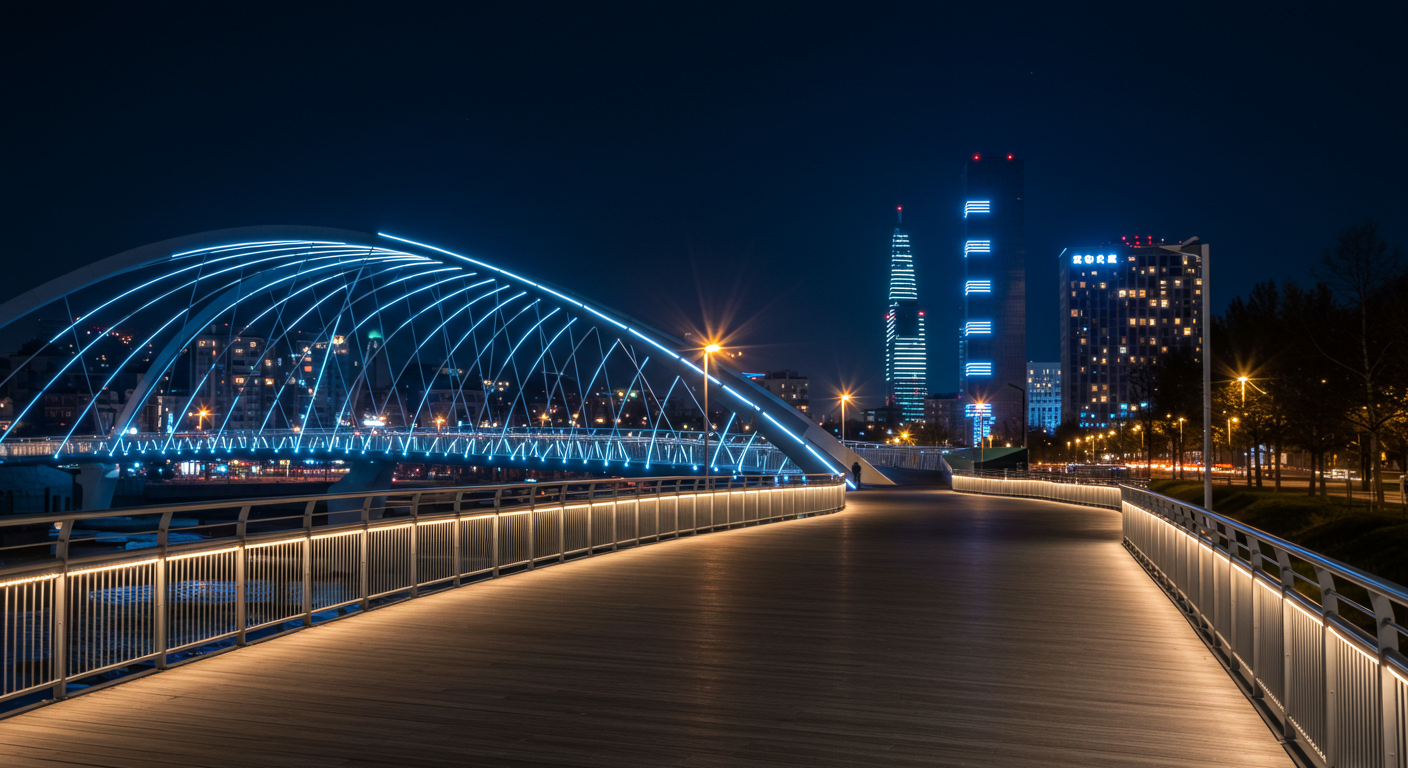
Cities have always communicated through their architecture, their street signs, their rhythms. But in the 21st century, a new language has emerged—one written in light. Integrated LED displays, embedded into streetlights, bus stops, and public plazas, are transforming urban infrastructure from passive backdrop into active participant. These are not billboards shouting for attention; they are subtle, intelligent interfaces that inform, guide, and sometimes simply beautify. A parking lot sign glows with real-time availability. A roadside column displays weather alerts or transit updates in clean, legible typography. At night, these structures emit a soft, steady luminescence that feels less like technology and more like civic poetry. The brilliance lies in their seamlessness. They don’t disrupt the streetscape; they enhance it. Double-sided displays ensure visibility from multiple angles without cluttering the visual field. Some even incorporate audio for accessibility, delivering critical information to those who cannot see. This integration reflects a deeper shift in urban design: the belief that technology should serve the public quietly, efficiently, and elegantly. It’s not about spectacle; it’s about utility wrapped in grace. In a world where digital noise is everywhere, these embedded LEDs offer something rare: clarity without chaos, presence without intrusion. They are the city’s quiet pulse—steady, reliable, and always speaking in a voice that respects the listener.